

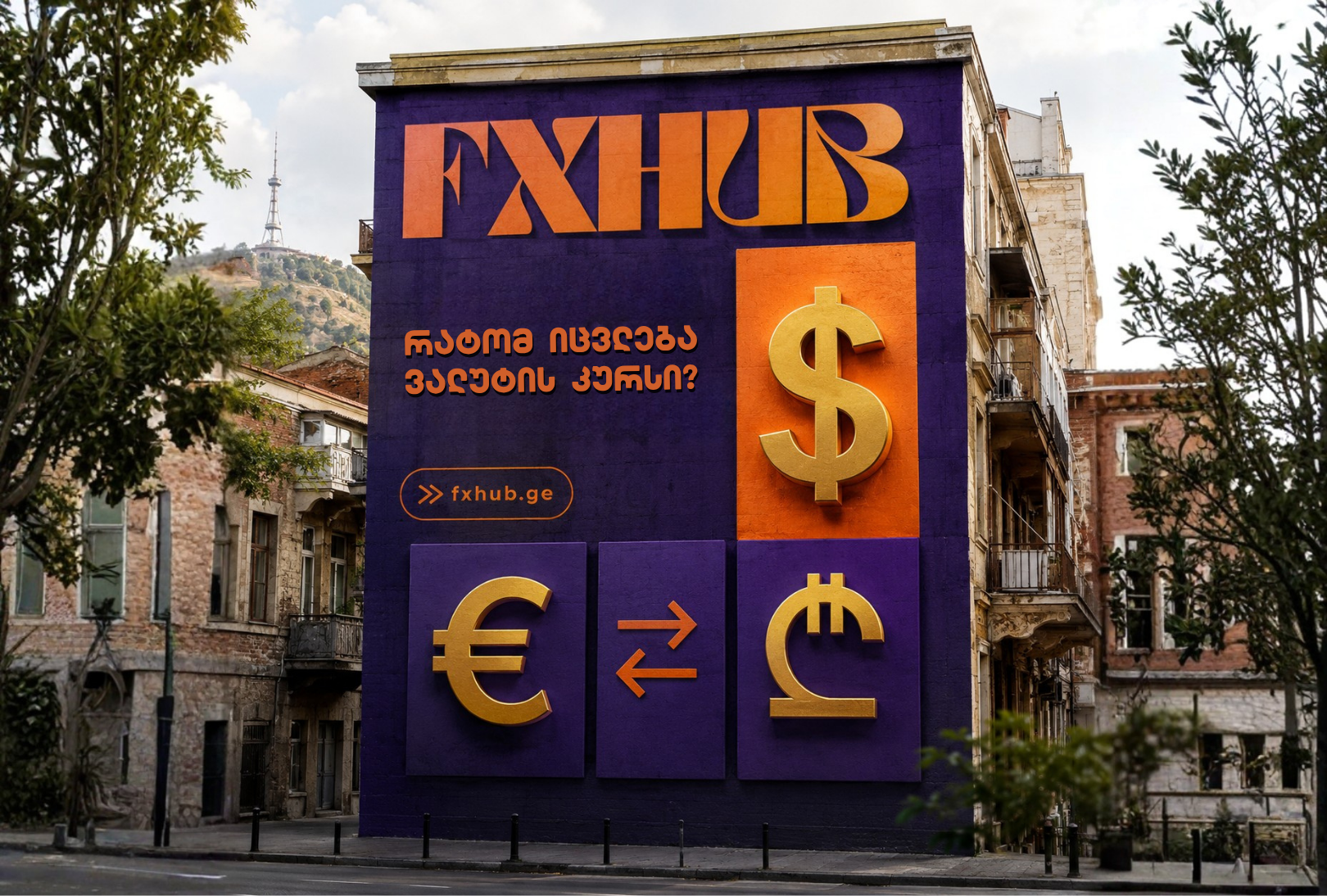
Why Do Exchange Rates Change and What Affects the USD and EUR Exchange Rate?
Why Do Exchange Rates Change and What Affects the USD and EUR Exchange Rate?
An exchange rate shows the value of one currency relative to another. For example, the USD/GEL exchange rate indicates how many Georgian lari are required to buy one US dollar. The EUR/GEL rate works in the same way for the euro.
Exchange rates are not fixed. They can move throughout the day, and the rate offered by a bank, physical exchange office or online platform may differ. For this reason, checking and comparing actual exchange offers before converting money can make a meaningful difference.
What is an exchange rate?
An exchange rate is the relationship between two currencies. If the USD/GEL rate moves, the relative value of the US dollar and Georgian lari has changed.
Some of the most commonly followed rates in Georgia include:
- USD/GEL exchange rate;
- EUR/GEL exchange rate;
- GEL exchange rates against other major currencies.
However, the number displayed as an exchange rate is the result of a much larger market process. A range of economic and financial factors can influence currency values at the same time.
Why do exchange rates change?
Currency prices are strongly influenced by supply and demand. When demand for a particular currency increases, its value may rise relative to another currency. When demand weakens or supply increases, the opposite movement may occur.
1. Supply and demand
Demand for foreign currency can increase because of imports, international payments, travel and other economic activity. At the same time, foreign currency entering a country can increase supply and influence the market in the opposite direction.
2. Inflation
Inflation is closely connected with the purchasing power of a currency. Changes in inflation and expectations about future inflation can influence the decisions of investors, businesses and other market participants.
3. Interest rates
Interest rates set by central banks are another important factor for currency markets. Changes in interest rates affect borrowing, saving, investment and capital flows, which can ultimately influence exchange rates.
4. Economic performance
Economic growth, trade, investment, employment and other macroeconomic indicators help shape expectations about a country's economy.
When those expectations change, demand for the country's currency may change as well.
5. International developments
Exchange rates are also affected by events outside a country's borders. Changes in global financial markets, international economic developments, commodity prices and global risk sentiment can all influence currency values.
As a result, USD or EUR exchange rates may move even when there has been no major economic event in Georgia itself.
Why is the official exchange rate different from the rate you actually receive?
A common question is why the official reference rate does not always match the rate available from a bank, exchange office or online currency exchange platform.
An official exchange rate serves as a reference point, while individual service providers determine the actual buy and sell rates they offer customers.
When exchanging money, the most important number is therefore the rate that will actually be applied to your transaction.
Why can exchange rates differ between providers?
The same currency can be offered at different rates at the same time. Differences may depend on market conditions, the provider's pricing model and the spread between its buy and sell rates.
That is why knowing the general market rate is useful, but comparing actual offers before making an exchange can be even more important.
Why can a small difference in the exchange rate matter?
With a small transaction, the difference between two exchange rates may appear insignificant. As the amount being exchanged increases, however, the effect of that difference becomes more noticeable.
When converting several thousand dollars or euros, even a relatively small difference in the rate can affect the final amount received.
For larger transactions in particular, comparing rates and looking for a favorable exchange rate can therefore be worthwhile.
How to choose an exchange rate
Before exchanging currency, consider the following:
- Check the current rate for the currency you need;
- Compare actual buy and sell rates from different providers;
- Calculate how much you will receive after the conversion;
- Check whether any commission or additional charge applies;
- Pay closer attention to rate differences when exchanging larger amounts.
Online currency exchange with FXHUB
When you need to exchange currency, you can also check the current offer on FXHUB.
FXHUB allows customers to exchange currency online 24/7. You can check the available rate and complete your currency conversion online when needed.
Because currency markets move continuously, it is worth checking the rate shortly before exchanging. Choosing a more favorable rate can become particularly important when converting larger amounts.
Summary
USD, EUR and GEL exchange rates are influenced by supply and demand, inflation, interest rates, economic conditions and developments in international markets.
Because these factors constantly change, exchange rates move as well and can differ between service providers. Before exchanging currency, compare available offers, calculate the final amount and choose the rate that works best for you.